Guides · St. George Island, Florida
St. George Island Architecture: Reading the Buildings
Clear and salt-worn, St. George Island’s built story isn’t about landmarks. It’s about what it takes to stay.
The Cape St. George Light: A History of Rebuilds
The Cape St. George Light is the island’s best metaphor: a structure built, destroyed, and rebuilt more times than it has stood still. First raised in 1833 at the cape on the western end, it was rebuilt two miles away in 1847–48 after the original was lost. A hurricane in 1851 knocked it down again, and it was rebuilt once more. Decommissioned in 1994, the tower’s foundation collapsed in 2005—and then it was reconstructed, again, at a new site. The light keeps moving because the island keeps moving. Storms shift sand, and the island’s answer has always been to rebuild, not to abandon. That pattern—loss, relocation, reconstruction—is the island’s architectural signature, visible in how it handles everything from shoreline homes to public infrastructure.
Life Before the Bridge: An Island Reached by Ferry
Until 1960, the only way onto St. George Island was by ferry. That isolation wasn’t an inconvenience; it was a filter. The island’s early building stock reflects that era: modest, functional structures built by people who chose to be there and knew they couldn’t just drive out when a storm came. The four-mile St. George Island Bridge to Eastpoint, completed in the mid-1960s, changed the math. Suddenly the island was reachable, and the character of its built environment shifted from necessity to choice. The bridge brought seasonal visitors, and with them, a different kind of construction—vacation homes, rentals, and the infrastructure to support them. The island didn’t lose its resilience; it just started building for a different kind of presence.
Seasonal Living: Vacancy Rates and Home Values
The census tells a story the architecture confirms. Of 1,815 total housing units, 1,246 are vacant. That’s not abandonment; that’s seasonal rhythm. 534 units are held for seasonal or recreational use, and the median age is 60.9 years. The island’s buildings are mostly shuttered for much of the year, their windows dark, their docks empty. The median home value is $628,500, and the unemployment rate is 0 percent—but that’s a small, wealthy, part-time population. For visitors, this means the island’s built environment is one of absence: quiet streets, closed businesses, and a pace that doesn’t advertise itself. The architecture isn’t a backdrop; it’s a calendar.
St. George Island State Park: Preserving Nine Miles of Beach
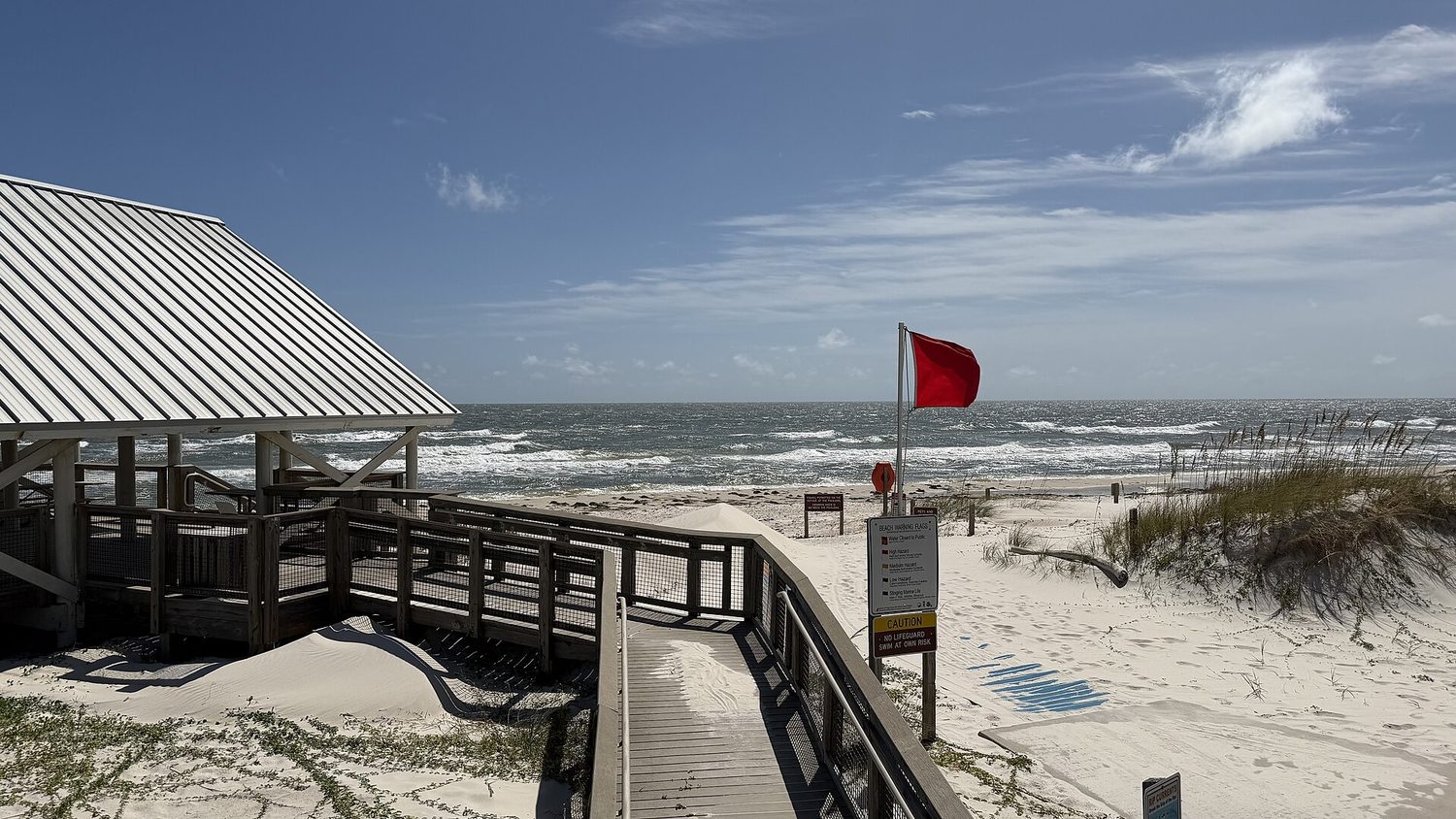
On the eastern end, the built environment stops. Dr. Julian G. Bruce St. George Island State Park began with an 1,800-acre state purchase in 1973, and it remains the island’s counterweight to development. Where the west end fills with homes and rentals, the park holds nine miles of undeveloped beachfront—no structures, no concessions, just sand and dunes. The contrast is deliberate: the park preserves what the rest of the island was before the bridge. The architecture of the park is the absence of architecture.
Seafood Buildings: Docks, Markets, and Processing Sheds
The island’s food identity is tied to Apalachicola Bay, and the buildings that serve it are functional first. Oysters are the anchor, but the bay also yields scallops, grouper, flounder, redfish, snapper, trout, and mullet. The architecture that supports this isn’t glamorous: docks, seafood markets, and processing sheds built for ice, tide, and turnover. These are working structures, designed to move product from water to plate quickly. They don’t advertise themselves as landmarks, but they are the island’s most honest buildings—built for the catch, not for the postcard.
The St. George Island Chili Cook-Off: A Community Event
The St. George Island Chili Cook-Off started over forty years ago as a small fundraiser for the island’s volunteer fire department, and the proceeds still go to local emergency services. It has grown into an International Chili Society competition drawing cooks from across the country, with a silent auction and the Red Pepper 5K. For one day, the island’s social architecture takes over: the volunteer fire department building, the open spaces for the auction, the roads closed for the race. The event is a reminder that the island’s built environment isn’t just homes and docks—it’s also the infrastructure of community, assembled in a day and packed up by nightfall.
St. George Island by the Numbers
| Statistic | Value |
|---|---|
| Population | 1,218 people |
| Total housing units | 1,815 units |
| Vacant housing units | 1,246 units |
| Seasonal or recreational homes | 534 units |
| Median age | 60.9 years |
| Median household income | $96,250 |
| Median home value | $628,500 |
| Bachelor's degree or higher | 60.6 percent |
| Unemployment rate | 0 percent |
The island’s buildings don’t pretend to be permanent. They’ve been rebuilt, relocated, and left empty for months at a time. That’s not a flaw; it’s the design.
Common questions
- How do you get to St. George Island?
- Until 1960, the only way was by ferry. Today you drive the four-mile St. George Island Bridge from Eastpoint, which opened in the mid-1960s. The bridge connects the island to the mainland and Franklin County.
- What is the beach like at St. George Island?
- The beach at Dr. Julian G. Bruce St. George Island State Park was rated the number one beach in the United States by Dr. Beach in 2023. It's on the island's eastern end, part of an 1,800-acre state purchase from 1973.
- What happened to the Cape St. George Lighthouse?
- Built in 1833, it was rebuilt two miles away in 1847-48, then again after an 1851 hurricane. It was decommissioned in 1994, and after its foundation collapsed in 2005, it was reconstructed. You can still see it today.
- Is St. George Island a good place for seafood?
- Yes. Apalachicola Bay supplies oysters above all, plus scallops, grouper, flounder, redfish, snapper, trout, and mullet. Many visitors eat fresh seafood right on the island or take a short trip to nearby Apalachicola, nine miles away.
- What is the island's population like?
- The permanent population is about 1,218 people, with a median age of 60.9. Most homes—1,246 of 1,815 units—are vacant, and 534 are seasonal or recreational, so it's quiet outside peak times.
- Are there any annual events on the island?
- The St. George Island Chili Cook-Off started over forty years ago as a fundraiser for the volunteer fire department. It's now an International Chili Society competition, with a silent auction and the Red Pepper 5K. Proceeds still support local emergency services.
Every business named above is one we hold a listing for, and every date traces to a source on our sources page. We do not describe menus, interiors or service we have not verified. Details change — confirm before you travel.