Guides · St. George Island, Florida
St. George Island by the Numbers: What the Census Says
The island’s census data tells the story of a place that is less a year-round town than a deeply loved, deeply expensive second home.
Here is what the numbers say about St. George Island, and what they don’t.
A Town of 1,218
The permanent population is small — 1,218 people. That is not a typo. It is fewer than the number of houses.
The census counts 1,815 total housing units. Of those, 1,246 are vacant. That is not abandonment. That is seasonality. The island swells in summer and shrinks in winter, and the vacancy rate is simply the off-season breathing out.
Of the occupied homes, 534 are held for seasonal or recreational use. That is nearly a third of all housing on the island. The census does not ask who lives here full-time, but the math suggests it is a fraction of the already small base.
The Age and the Income
The median age is 60.9 years. This is not a young person’s town. It is a place for retirement, for second careers, for people who have earned the right to slow down.
That age is paired with a striking income figure: a median household income of $96,250. That is well above the national median, and it reflects a population that is largely professional, largely educated, and largely not working a local wage job.
The unemployment rate is 0 percent. That is not a jobs boom. That is a place where most residents are either retired, self-employed, or wealthy enough not to need work. When your median age is over 60, the unemployment line is mostly empty because the workforce itself is mostly absent.
The Education Split
60.6 percent of residents hold a bachelor’s degree or higher. That is a high number for rural Florida — higher than most of the state’s interior counties. It is the profile of a place that attracts people who worked in cities and then left them.
The median home value is $628,500. That is the number that explains everything else. It is why the population is small, why the age is high, and why so many homes sit empty for most of the year. This is not a working waterfront town. It is a place where the working waterfront is a memory, and the new economy is equity.
What the Numbers Miss
The census does not measure the oysters. It does not count the way Apalachicola Bay’s seafood — oysters above all, alongside scallops, grouper, flounder, redfish, snapper, trout and mullet — anchors the local identity, even as the harvest shrinks and the water warms.
The census does not record the bridge. But the island was reachable only by ferry until 1960. The four-mile St. George Island Bridge to Eastpoint was completed in the mid-1960s. That bridge is the reason the numbers look the way they do. Before it, there was no real estate market. After it, there was a boom.
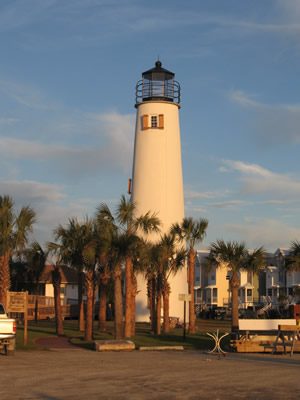
The census does not mention the light. The island takes its name from Cape St. George at its western end, where the light was first built in 1833. It was rebuilt two miles away in 1847-48, then rebuilt again after an 1851 hurricane. It was decommissioned in 1994, and its foundation collapsed in 2005. It was reconstructed. That history is not in the data, but it is in the ground.
The Park and the Beach
The census counts people, not sand. But the beach is the reason anyone is here at all.
Dr. Julian G. Bruce St. George Island State Park occupies the eastern end of the island. It began with an 1,800-acre state purchase in 1973. Dr. Beach rated its beach the number one in the United States in 2023. That ranking is real, and it is the only one we need. Forbes put it third in 2013, but third is not first.
The park is the natural boundary of the town. It keeps the development from spreading too far east, and it preserves the dunes and the flats and the shorebirds. The census does not count the gulls. It does not count the tide.
The Cook-Off
The numbers say nothing about the annual St. George Island Chili Cook-Off. It started over forty years ago as a small fundraiser for the island’s volunteer fire department. The proceeds still go to local emergency services. It is now an International Chili Society competition, drawing cooks from across the country, with a silent auction and the Red Pepper 5K.
That event is the opposite of the census. It is loud, crowded, and temporary. It brings people in from off-island, fills the parking lots, and reminds everyone that this place is not just a spreadsheet.
The Takeaway
St. George Island is a small town with a big price tag. The census shows a place that is older, richer, and more educated than most of rural Florida. It shows a housing stock that is mostly empty, a workforce that is mostly retired, and a community that is mostly seasonal.
But the numbers do not capture the ferry crossing, the bridge, the collapsing and rebuilt light, or the oysters that built the regional reputation. Those things are not in the data. They are in the salt air.
The numbers tell you who lives here. The history tells you why.
Every business named above is one we hold a listing for, and every date traces to a source on our sources page. We do not describe menus, interiors or service we have not verified. Details change — confirm before you travel.