Guides · St. George Island, Florida
St. George Island History: Oysters, Lighthouse & Bridge
St. George Island’s story is a loop of tide and timber: a lighthouse that kept falling down, a bay that paid the bills in oysters, and a bridge that turned a ferry-only outpost into one of the most quietly valued strips of sand in the country.
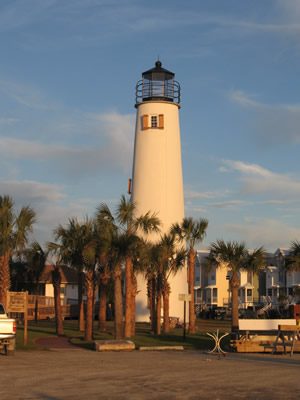
The Lighthouse That Kept Falling Down
The island takes its name from the cape at its western end, and the history there is one of stubbornness against the sea. The light was first built in 1833, then rebuilt two miles away in 1847–48 after storms and shifting sands made the original spot untenable. It was rebuilt again after an 1851 hurricane, decommissioned in 1994, and then its foundation collapsed in 2005. The structure you see today is a reconstruction, a symbol of the island’s refusal to let the Gulf dictate the terms. It is the closest thing this coast has to a family heirloom that keeps getting knocked over and put back up.
Life Before the Bridge: A Ferry-Only Island
Until 1960, the island was reachable only by ferry. That meant groceries, mail, and building supplies all came across Apalachicola Bay on a schedule. The island was not a destination; it was a place you had to plan for. The completion of the four-mile St. George Island Bridge to Eastpoint in the mid-1960s changed the arithmetic. Development followed the pavement, but the pace stayed slow enough that the island never traded its character for a strip of neon. The bridge did not just open the island; it made it possible for people to own a piece of it without committing to the ferry schedule.
How Oysters Built the Gulf Coast Economy
Before the bridge and long after, the economic engine of this region was Apalachicola Bay, and the fuel was oysters. Above all, oysters—alongside scallops, grouper, flounder, redfish, snapper, trout, and mullet. The working waterfront in nearby Apalachicola was not a tourist amenity; it was a job. Shucking houses, skiffs at dawn, and the rhythm of the harvest shaped the towns on the mainland side of the bay. The island itself was mostly sand and scrub, but its proximity to that harvest meant the people who lived here were tied to the water’s production, not its recreation. That industry built the coast’s identity long before anyone ranked a beach.
The State Park That Saved the Island's Wild Side
Development might have swallowed the island whole if not for a state purchase in 1973 of 1,800 acres on the eastern end. That land became Dr. Julian G. Bruce St. George Island State Park, and it is the reason the island has a wild edge instead of a gated one. The park’s beach earned the number one ranking in the United States from Dr. Beach in 2023—Forbes had put it third in 2013—and that ranking turned a local asset into a national draw. The park is the counterweight to the island’s residential side: miles of undeveloped shoreline, no boardwalk, no vendors. Just the sand that earned the title.
What the Census Reveals: A Community of Second Homes
The census figures for the island sketch a place that is less a town than a retreat. The population is 1,218 people, with a median age of 60.9 years. Of the 1,815 total housing units, 1,246 are vacant, and 534 are held for seasonal or recreational use. The median home value sits at $628,500, and the median household income is $96,250. The unemployment rate is 0 percent. More than 60 percent of residents hold a bachelor’s degree or higher. This is not a working-class fishing village anymore; it is a high-value, low-density community of retirees and second-home owners who come for the light and the lack of noise.
Island Events: Chili Cook-Off and Nearby Seafood Festivals
The island’s social calendar revolves around the St. George Island Chili Cook-Off, which started more than forty years ago as a small fundraiser for the volunteer fire department. The proceeds still go to local emergency services, but the event has grown into an International Chili Society competition drawing cooks from across the country, complete with a silent auction and the Red Pepper 5K. It is the one weekend a year the island feels crowded. For the rest of the year, the area’s festival rhythm belongs to the mainland: Apalachicola, nine miles away, hosts the Florida Seafood Festival, and Port St. Joe, 31 miles off, runs the Florida Scallop, Music & Arts Festival. Together they make the region a year-round destination for anyone who wants oysters in the fall and scallops in the summer.
| Town | Distance from St. George Island |
|---|---|
| Apalachicola | 9 miles |
| Port St. Joe | 31 miles |
| Perry | 96 miles |
| Steinhatchee | 104 miles |
| Cedar Key | 132 miles |
| Dade City | 206 miles |
The island’s past is a story of water making the decisions. The light fell, the oysters fed, the bridge came, and the park held the line. What remains is a place that rewards patience and punishes hurry.
Common questions
- How do you get to St. George Island?
- Until 1960, the island was reachable only by ferry. The four-mile St. George Island Bridge to Eastpoint was completed in the mid-1960s, and that's still the way in by car today.
- What is the history of the Cape St. George Light?
- The light was first built in 1833 at the cape on the island's western end. It was rebuilt two miles away in 1847-48, again after an 1851 hurricane, decommissioned in 1994, and reconstructed after its foundation collapsed in 2005.
- Is the beach really that good?
- Dr. Beach rated the beach at Dr. Julian G. Bruce St. George Island State Park number one in the United States in 2023. Forbes had it third in 2013. The park itself came from an 1,800-acre state purchase in 1973.
- What seafood is local?
- Apalachicola Bay seafood is the draw—oysters above all, alongside scallops, grouper, flounder, redfish, snapper, trout, and mullet. You'll find it in local restaurants and at the Florida Seafood Festival in nearby Apalachicola, nine miles away.
- What's the island like year-round?
- It's a quiet place—population is 1,218 with a median age of 60.9. Of 1,815 housing units, 1,246 are vacant, and 534 are seasonal or recreational homes. Unemployment is at 0 percent, and median household income is $96,250.
- Any annual events on the island?
- The St. George Island Chili Cook-Off started over forty years ago as a small fundraiser for the volunteer fire department. It's now an International Chili Society competition with a silent auction and the Red Pepper 5K, and proceeds still go to local emergency services.
Every business named above is one we hold a listing for, and every date traces to a source on our sources page. We do not describe menus, interiors or service we have not verified. Details change — confirm before you travel.